#escapetheordinary
#iatraveler
#escapetheordinary
#iatraveler

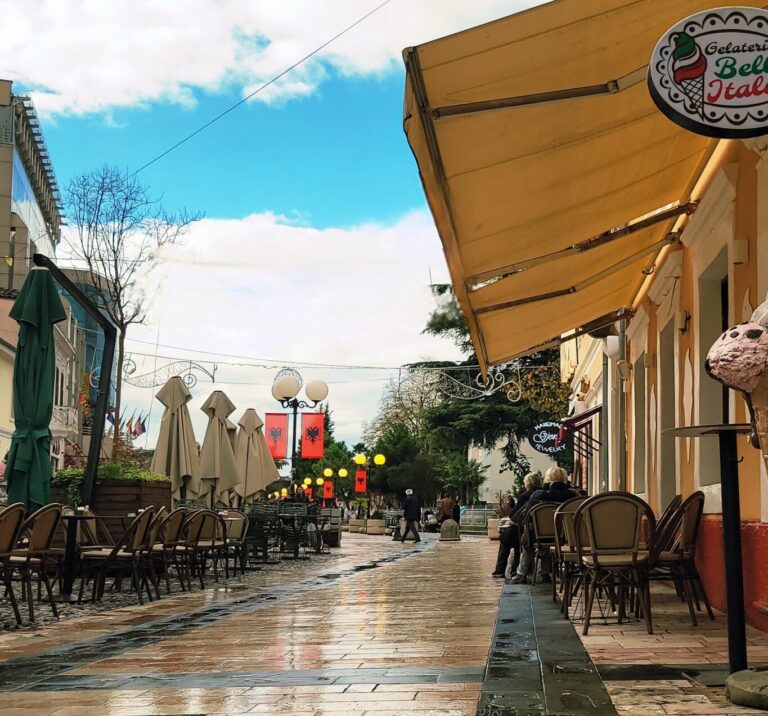
Before I ever set foot in Shkoder, every “what to eat in Albania” Google search fed me the same predictable list: byrek, grilled meat, raki and repeat. None of these articles prepared me for the actual pulse of food and cafe culture in Shkoder: the slow mornings, lingering afternoons, the tiny metal tables scattered across the sidewalks like they sprouted up over night. Albanians will sit at a cafe table for hours, slowly sipping the same drink, because cafes here are not businesses– they are the city’s living room.
Back in the States, I rarely drank coffee. I was a tea person to the core, and preferred my caffeine to come from Earl Gray or a spicy Chai, but Albania doesn’t exactly cater to black tea devotees. They have ḉaj mali, an herbal “mountain tea” made from the dried stems and leaves of a plant found high in the Alps. It is soothing, has excellent health benefi ts (it has currently replaced my dandelion tea) but completely caffeine free. Not ideal for a digital nomad who needs her “focus fuel”. I did eventually track down some actual Earl Grey in a German import shop, but by then had already surrendered to Albanian coffee culture.
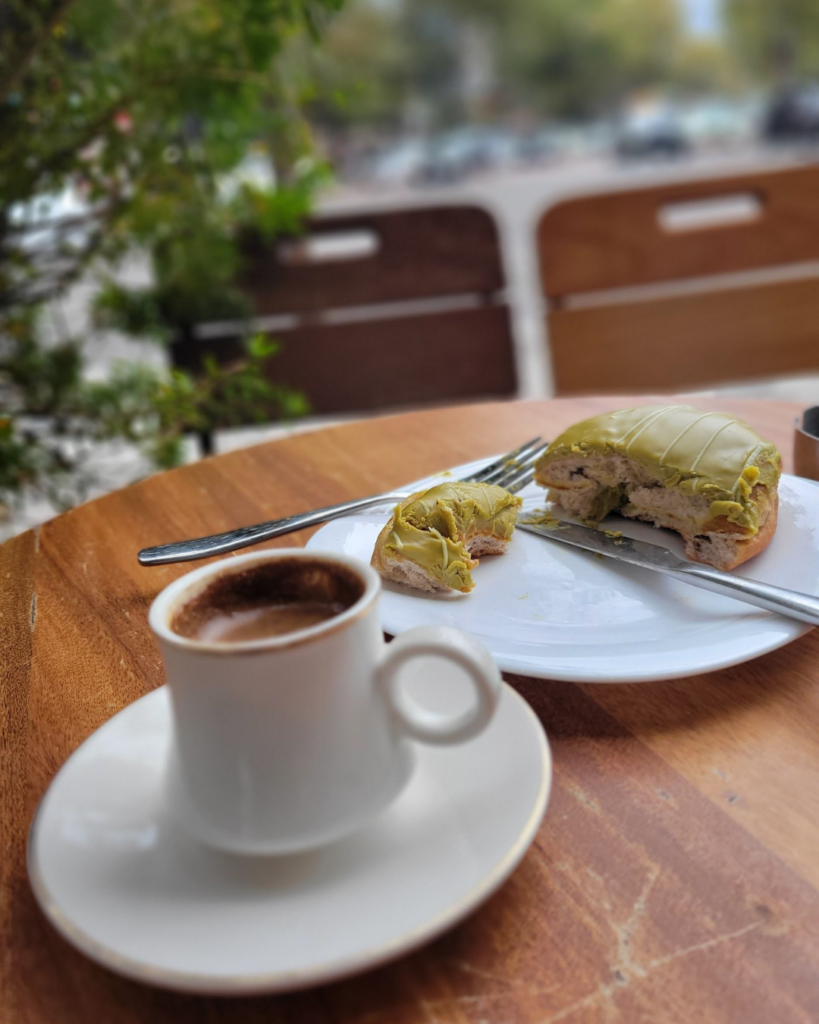
My mornings began with a large cappuccino from my favorite place for coffee and pancakes (more on the pancakes later) or a Turkish coffee with milk, sugar and a pistachio pastry. I learned to swirl the cup gently at the end so the grounds settled, and to
treat the last sip like quick-sand: beautifully dangerous and not to be swallowed. The warmth of the cup, aroma of roasted beans and the buzz of Albanian conversation pulled me into daily life quickly, and yet somehow gently.
There are no “to-go lattes”. If you don’t sit in cafes in Shkoder, you truly will not enjoy your time here. And the locals can immediately spot an outsider: the way we check our phone too much, drink our macchiato too fast, or get confused when the waiter doesn’t bring the bill until you explicitly ask for it. Here, it is assumed you will stay awhile.
Once caffeine anchored me, I started eating my way through the city.
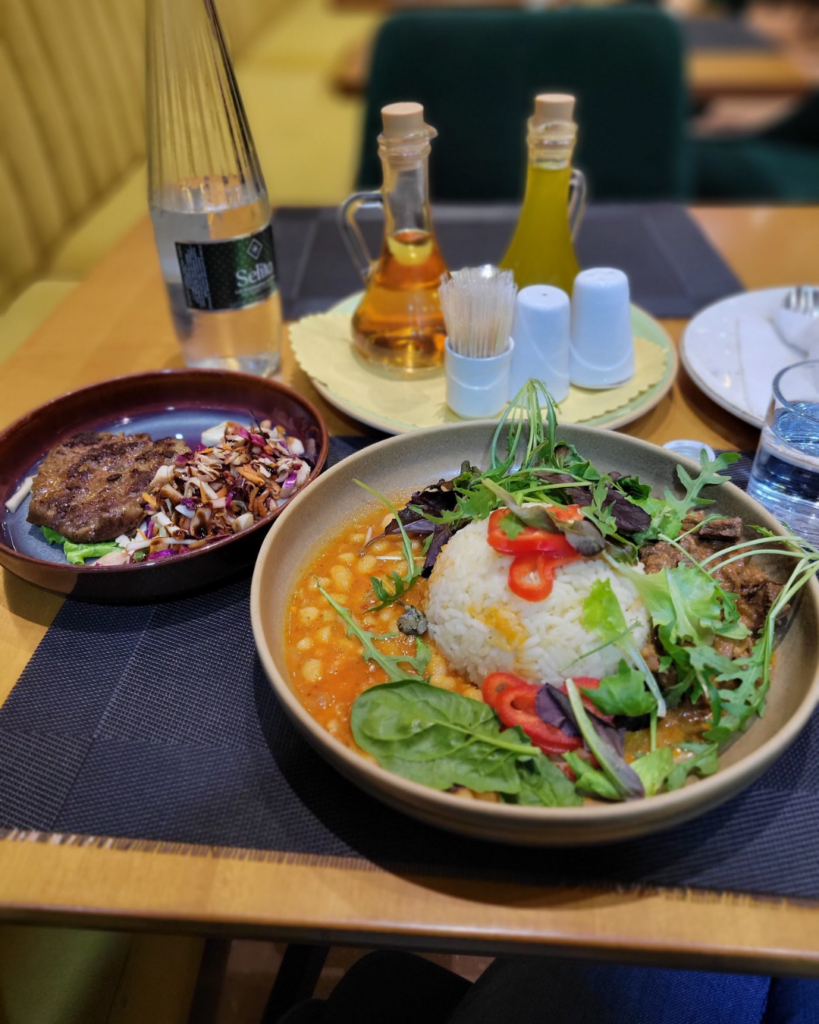
My first real meal was something called “Father’s Rice”. To this day, I don’t fully know what it is. A large ball of rice is served on a platter, topped with something goulash-like alongside English style beans, bright slices of fresh sweet red peppers and topped with dark lettuce leaves. A separate accompanying plate offers a fl avorful hamburger-like patty atop a purple cabbage “slaw” dressed with balsamic vinegar and oil. It looks like a family dinner made by someone who wasn’t sure what you liked, so they gave you everything. Confusing, comforting, and surprisingly good; I returned twice for it.
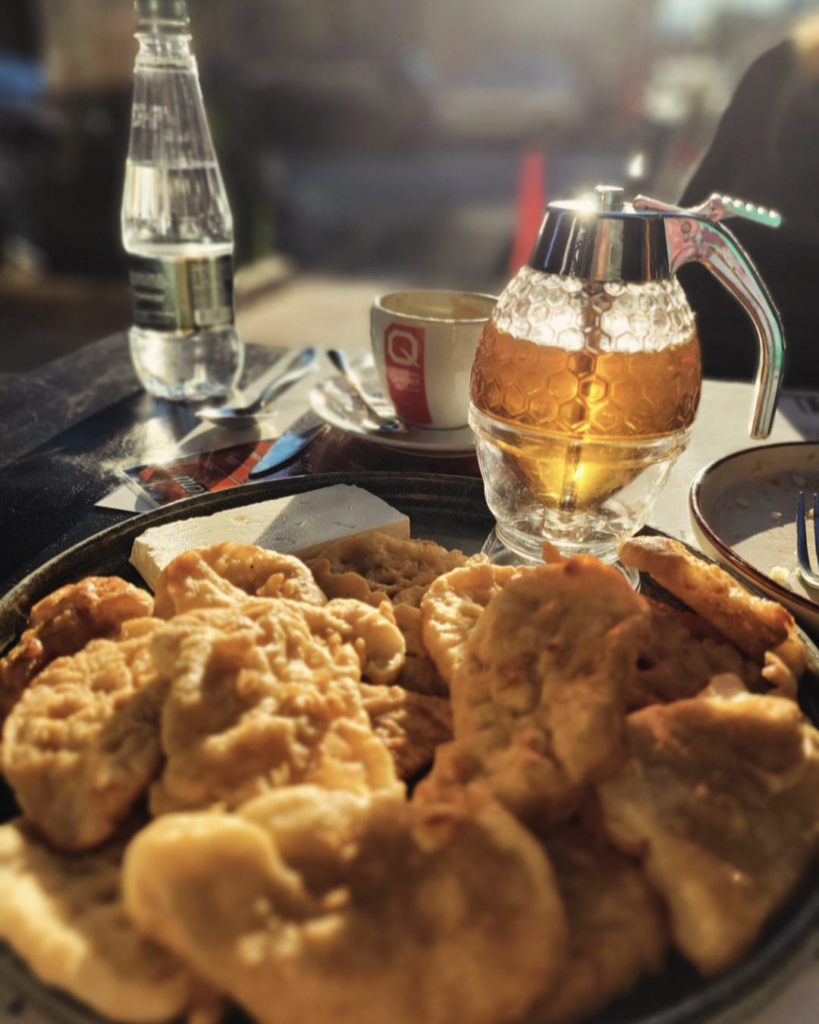
Petulla (I was told translates to “pancakes”) started as a breakfast love affair, but became my “go-to” for lunches, snacks, and dinner. These are not American IHOP diner pancakes. They’re small golden clouds, crisp at the edges and soft in the middle. They come warm, slightly oily, and
drizzled with honey or a smear of cheese and jam; they make me think of what would happen if Native American Fry Bread met a more mature Funnel Cake and this was the small, exotic offspring. They taste like comfort, like childhood, like the kind of simple joy you don’t realize you’ve missed until it’s sitting in front of you on a plate.
Then there’s byrek, the most dependable companion in Albania. Byrek doesn’t fl irt or boast; it just fi lls you, warms you and crackles perfectly under your fi ngers. Layers of dough, salty cheese, spinach or minced meat, they are inexpensive, reliable and satisfying. Almost every restaurant has them, but the smallest neighborhood shop that sells them from their window will put them all to shame.
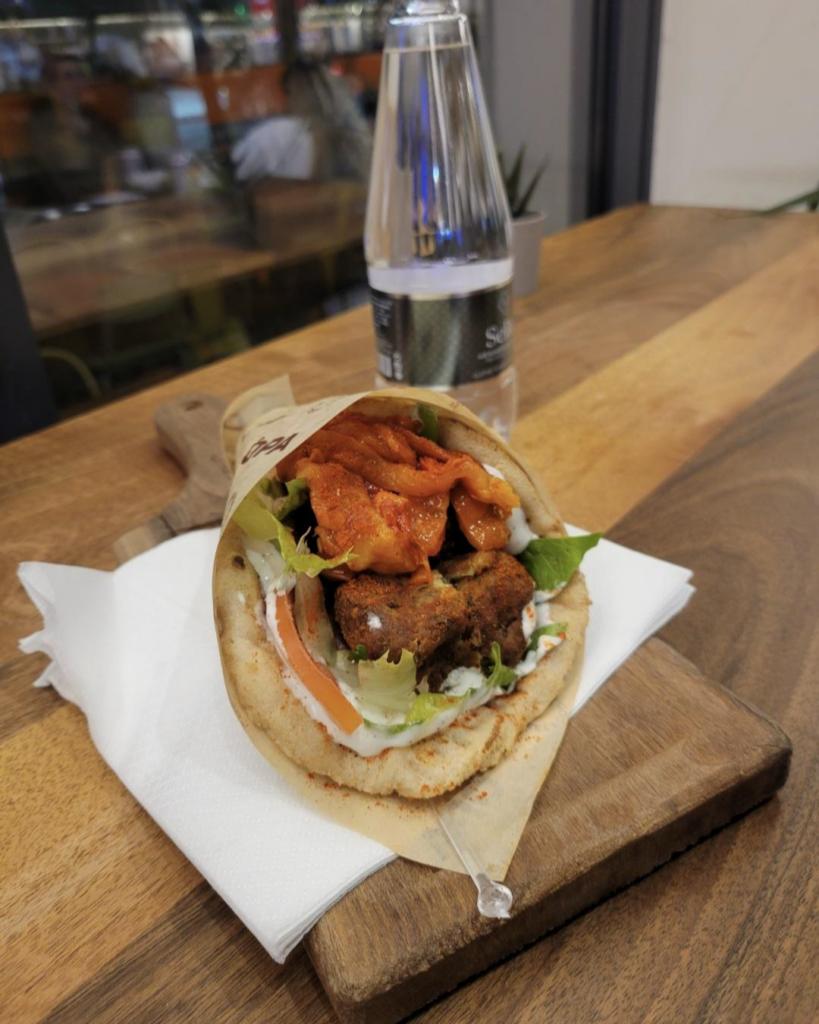
My education in Albanian street food began with something familiar, but with its own twist– Sufl aqe (souvlaki) – warm grilled meat, veggies, yogurt sauce, feta, and French Fries all inside a warm pita wrap and topped with “hot” ketchup. I am not a fry person, and don’t ask me to explain “hot ketchup”, but if I were and could, this would be my Empire. The doner, its even more messy, saucy cousin that tries to contain the delicious mayhem in a bun, always tastes better than you expect– even when you expect it to be good.
Then, inevitably, I met the WUDY– the Albanian hot dog. It appears everywhere: in a standard bun with ketchup (they also like to put mayonnaise on them) sandwiches, salads, pastas, and most weirdly (in my opinion) atop a pizza made with mashed potatoes instead of marinara sauce. I didn’t try the pizza, but I respect the cultural tenacity.
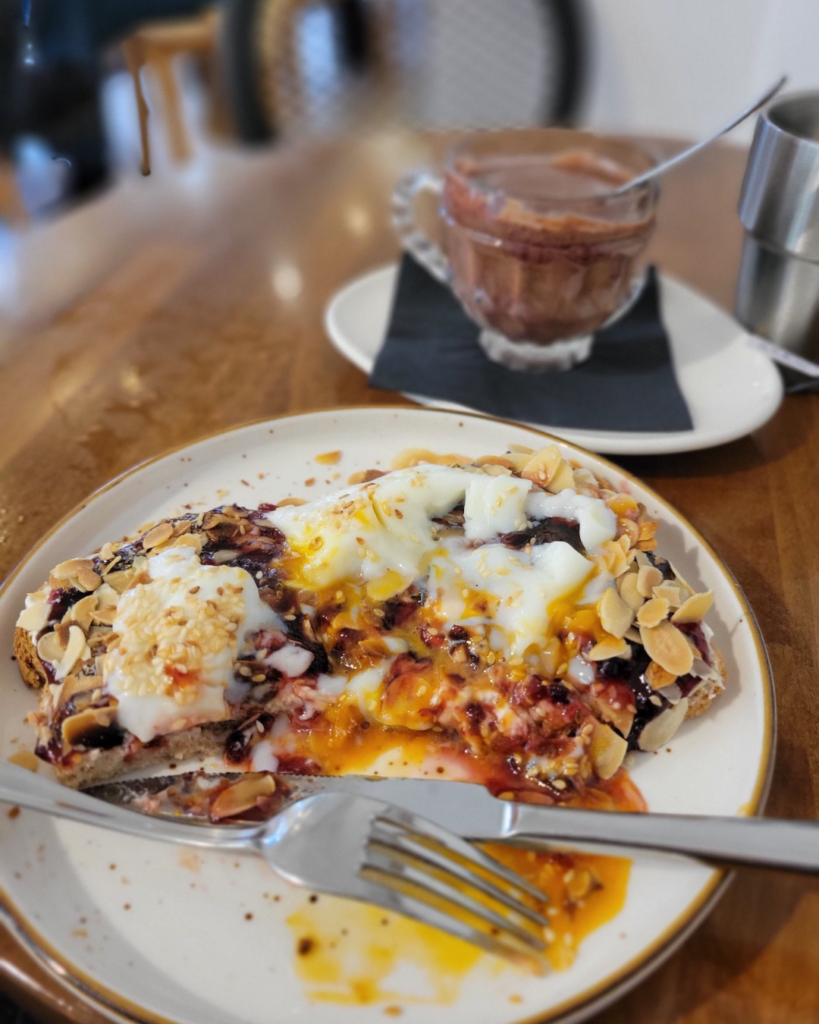
The toast truly deserves its own chapter in my opinion, but I do have dreams of a restaurant that serves only toast. Here it has its own menu category. They have all of my favorites: toast with butter and honey, toast with jam, toast with nutella, toast with nut butter, toast with cinnamon and sugar, toast with avocado. My absolute favorite dish here in Albania (I ate it four times in 3 weeks) is a slice of toast, made from freshly baked bread, smeared with cheese, tart cherry jam, slivered almonds and a poached egg on top. The egg usually gets me a funny look from the waiter; the eggs are traditionally for the “savory toasts” (usually smeared with cheese, avocado and thin slices of different cured meats). But, they always shrug with the universal Albanian response “Yes. No Problem”, and bring me the most divine, sweet-savory masterpiece I have ever eaten. I would fight for this toast.
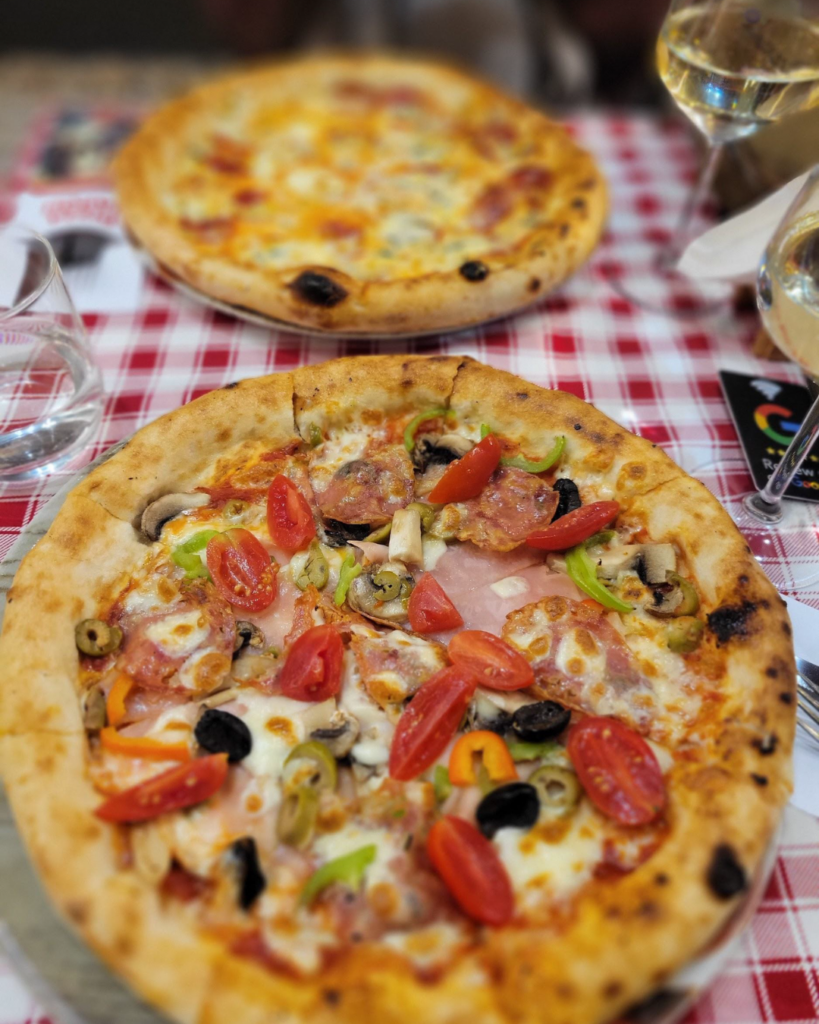
Of all of the surprises, the Italian cultural impact was by far the most delicious. Albania serves some of the best foresh pasta I have ever had. One rainy afternoon, I stopped in a “fast-food” place to take home some comfort carbs and was rewarded with a huge bowl of tagliatelle tossed in pesto so bright and fresh it tasted green in the best possible way. My favorite salad– arugula, spinach, beets, tomatoes, mango, cucumber, balsamic vinegar and oil was simple, stunning, and the perfect answer to the
feeling of “I just need a giant bowl of vegetables”. And the pizza Napoli here? Perfect crust, fresh tomatoes and mozzarella, drizzled with pepperoncini oil; I have never been to Naples, but this pizza made me understand the pilgrimage.
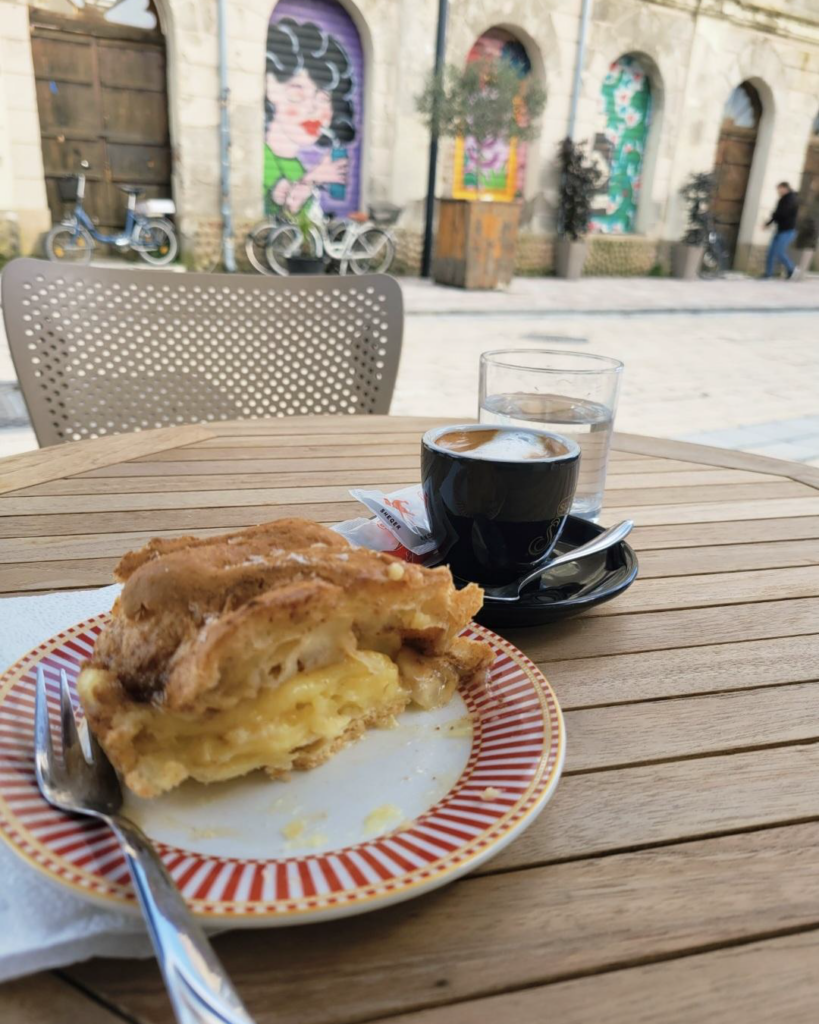
The deserts and pastries could also use their own chapter– again keeping in mind my own obsession with all things baked and/or sweet. The baklava is lighter and somehow less sugary than its Turkish relative, and the Kadaif calls for “shredding” the dough making it somehow even lighter. Trileqe, the Albanian relative of Tres Leches I won’t say is better than my beloved Hispanic version, but my sentiment might be gaslighting my tastebuds. The gelato also showcases the Italian infl uence of the food scene here, with shops on every street offering fl avors from Kiwi to Lotus (a cinnamon biscotti type cookie) that you can get in a cone for one euro. Don’t forget to also try Albanian “hot chocolate”– a cup of literal hot chocolate with a custard-like consistency that requires a spoon. Author’s note: you can also get the beverage hot chocolate, just be sure to order “hot cocoa”.
And then there’s raki.
The national drink.
The throat scorcher.
The fi rewater.
I barely touched it to my lips before my entire body said “No more of THAT thank you.” I respect its cultural signifi cance. I respect the people who drink it with their breakfast. I
respect the grapes, the plums, the various fruits that bravely gave their lives to the distilleries. But raki and I will never be friends. We had one encounter, and we parted ways as strangers with mutual boundaries.
If Albanian food has a fl aw, it’s the absolute absence of spice. Here there are no chilis, no jalapeños, no chili powder or fl akes, no Tapitio or Chalulula. Everything is fl avorful, but gentle. If I’m perfectly honest, I did fi nd myself dreaming about a single rebellious jalapeño like it was a long-lost lover.
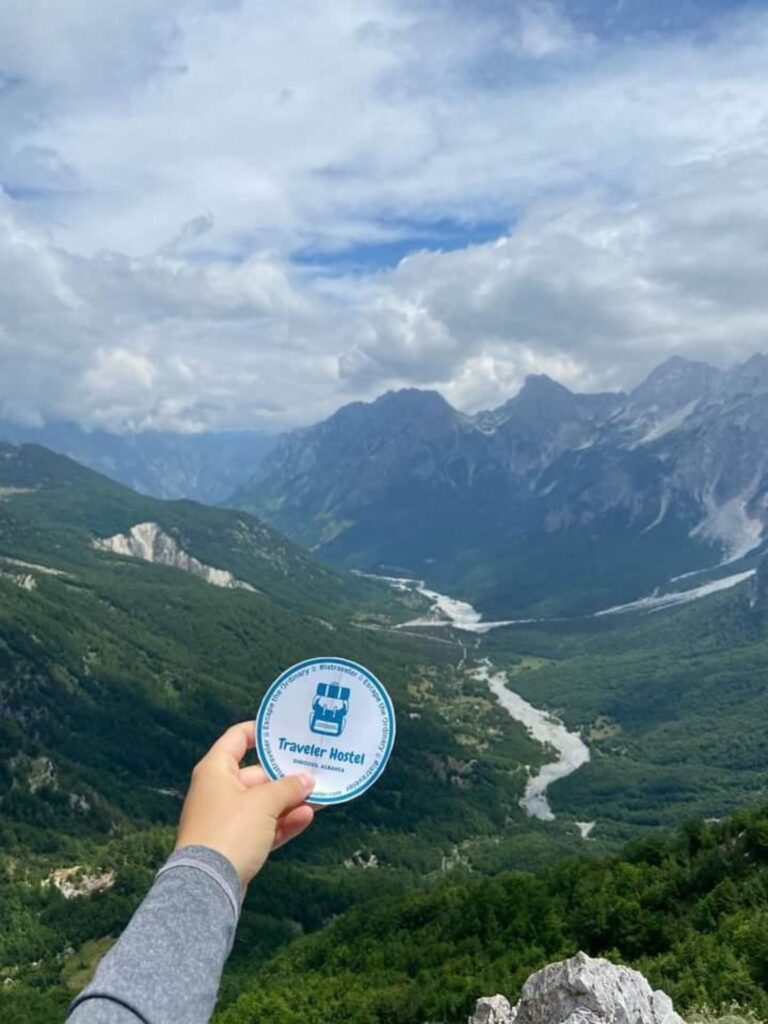
Although my experience at the Traveler Hostel was a little unusual (I was there during a slower time when the vibe was more calm and quiet) I still want to acknowledge how much the staff shaped my fi rst impressions of Albania. They pointed me toward some of my earliest meals here, including the unforgettable “Father’s Rice” and patiently answered every one of my “What is this food called again?” of “Where do I get the best pasta?” questions.
The Traveler Hostel itself has a food culture itself that I experienced the edges of. Mornings begin in the kitchen cafe where guests can buy a cappuccino the moment they wake up to sip in their pajamas while reading in the library. There is also “Family Dinner”, where the tables are put together, and the guests and staff gather to cook and eat together. Even without a crowd, you can feel this place is designed for community; the kind where strangers become temporary family over pasta, byrek, or whatever someone felt brave enough to attempt that night.
While my own stay was quieter, I’m grateful for the guidance, warm welcome, and the window into what this hostel truly is: a soft landing place for digital nomads, wanders, and anyone who fi nds themselves in Shkoder needing a home for a while.
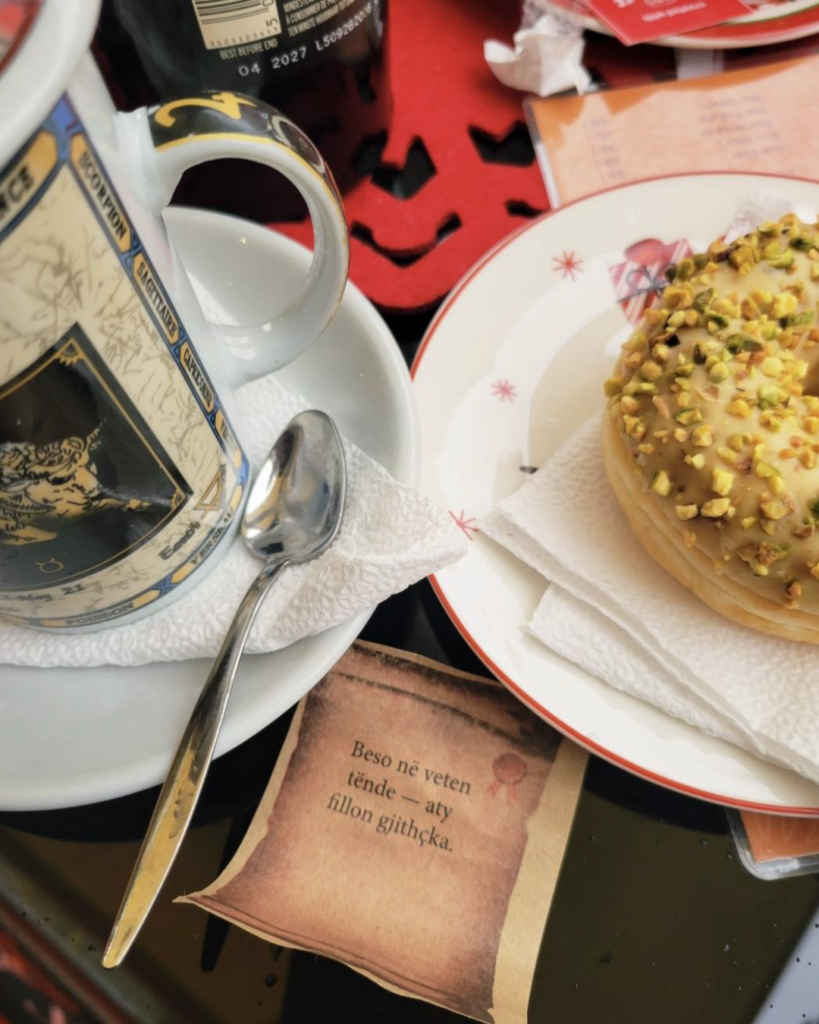
Eating in Shkoder taught me that food doesn’t need to shout to matter. Meals are slow, social and intentional. And even when I tried to keep things simple (like ordering toast) Albania still surprised me. This city feeds you the way it welcomes you: warmly, generously, and without pretense.
So if you’re curious about what to eat in Albania, the best food in Shkoder, Albanian coffee culture, or what you should know about Albanian cuisine as a digital nomad, here is my honest, lived-in answer:
Come hungry.
Come curious.
Come ready to linger.
And come prepared to sit down for coffee far more than you planned.
Because here, that’s how you become part of the city.
Post by: Sarah Joy